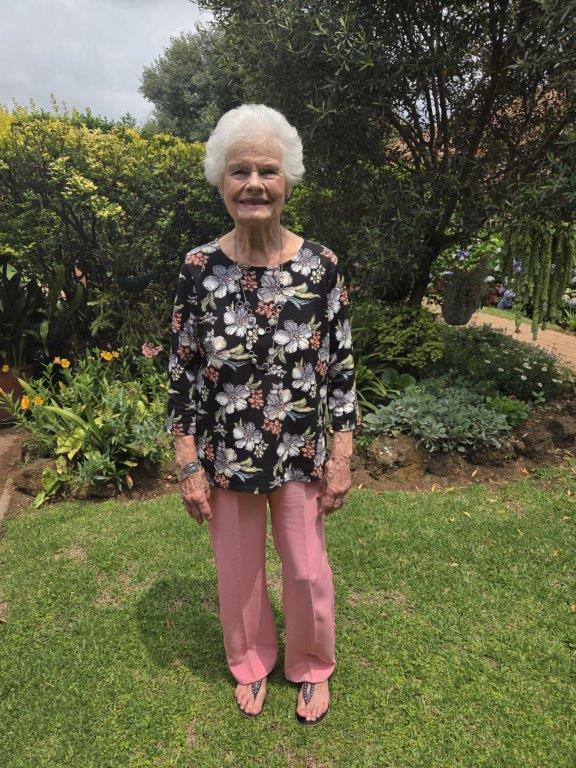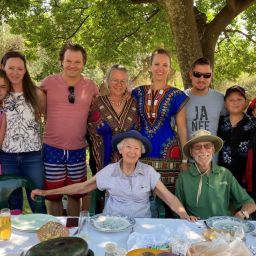

At 90 years old, Thornhill Manor resident Enid Dixon sits with a gentle confidence shaped by a life lived across eras of dramatic change.
Growing up as one of eight children, she recalls a childhood filled with laughter, chaos and companionship. “We had lots of fun,” she says warmly. “Life was simpler. My mom stayed home, cooked, washed, did everything, and we children kept each other busy with games. It was a wonderful time.”
Freedom and safety were defining features of her early years. “We could ride our bicycles for miles, even at night, and nothing would happen. You didn’t worry about locking doors. Life was safe.”
Navigating the digital age
Of all the modern inventions that have shaped her life, the telephone stands out. The shift from sturdy landlines to tiny smartphones was not easy. “I’m not a computer person,” she admits, “but once I got a cell phone, I realised how helpful it is, especially for travelling and keeping in touch.”
What concerns her, however, is how younger generations use these devices. She recalls recently watching young couples at a restaurant: “They didn’t speak to each other at all, just sat on their phones. It’s very sad. Phones are good, but people get carried away.” For herself, she keeps things simple – she uses her phone for calls and WhatsApp, especially to stay connected with family overseas.
Memories of a life in Rhodesia
When asked what she misses most, her answer is immediate: “The way of life. There was more kindness, more freedom. People weren’t so formal. You could walk at night and feel safe.” She compares this to the present day, where high walls and security gates keep people apart. “Kids today don’t have the fun we had.”
A significant chapter of her life was spent in Rhodesia (now Zimbabwe), where she and her husband raised their children. “It was a wonderful country,” she says, her eyes lighting up. “People were friendlier. You could just knock on a neighbour’s door and be welcomed with a cup of tea. Life felt open.”
The country’s political and economic collapse deeply affected many friends and families. She counts herself as fortunate that her husband’s employer ensured their pensions were paid out when they moved back to South Africa. “Many of our friends lost everything,” she says softly. “Some ended up living in backyard rooms or converted garages. It was heartbreaking.” Still, she speaks of Rhodesia as her ‘life for 35 years’, and her sons who grew up there, remain proud of their roots.
Strength through faith and family
Her husband passed away nearly 30 years ago, after a battle with cancer. Though the memory is tender, she describes that time with remarkable calm. “He loved the Lord right to the end. We prayed together every day. I knew he was at peace and out of suffering.”
She credits her faith and her family for carrying her through grief. One son manages her finances and supports her closely, and her grandchildren remain a source of joy.
The importance of adapting
When asked how she has managed to adapt to the dramatic changes of the last nine decades – from safety to security walls, landlines to smartphones – she answers simply: “Every day you accept these things in life. You remember the good, but you also know the world changes. If you don’t adapt, you can go bananas,” she says with a laugh. Adaptability, she believes, keeps older people connected to the world around them.
Advice for the younger generation
Her wisdom is both simple and profound:
- Have manners
- Respect older people
- Value family
- Keep your faith
“Youngsters today often just walk past you as if you’re invisible,” she says. “It shouldn’t be like that.” But her message carries no bitterness – only the hope that kindness and respect will not be lost to time.