
INTERNATIONAL DAY OF OLDER PERSONS (OCTOBER 1)
Growing older comes with lessons that can only be learned with time – and Thembalami Care Centre residents have plenty of advice for those who are still years away from retirement.
The 2026 United Nations International Day of Older Persons, observed on October 1 under the theme, The age of longevity: Rethinking systems for longer lives, asks how longer lives can be lived in health, security and dignity.
For Thembalami residents, the answers are practical. Save for retirement. Look after your health. Prepare for the changes that come with ageing. And, perhaps most importantly, recognise that older people still have hopes and a desire to remain independent and involved.
Don’t spend your retirement savings too soon
For 85-year-old Jacqui Stringer, financial planning is one of the most important lessons she can pass on.
Her advice to people approaching retirement is simple: “Never use up your pension. You end up retiring and you don’t have enough money. Keep your pension intact and save as much as you can.”
The reality, she says, is that ageing can be expensive. “You don’t think so when you are young, but it does.”
Thembalami deputy manager Elize Raath agrees that retirement planning needs to start well before retirement.
“The single most important thing to do before retirement is to create a realistic retirement plan that answers one question: ‘Will my money and resources reliably support the life I want for the rest of my life?’”
She encourages people to start saving as soon as they are financially stable and able to do so, noting that some older people seeking accommodation and care have only a SASSA pension and cannot afford the care they need.
Stay active while you can
For 88-year-old Errol Townsend, physical fitness is another investment that pays dividends later in life.
He has noticed that ‘the common drawback among the elderly is their legs go first’.
His advice is to start walking and exercising while you are still young and able to do so. “Get into the habit when you are young and keep it up,” he says.
Jo-Ann Noble (82) has experienced another side of ageing: The loss of mobility and independence. “I never thought I would become so disabled,” she says.
She points out that many places are not designed with older or disabled people in mind, with stairs and no lifts making everyday activities difficult.
“As you get older, you become slower, and you forget things. It is not easy to get old.”
Remember that older people are still people with plans and dreams
For 87-year-old Eunice de Jager, one of the hardest things about ageing is knowing there are still things she wants to do but can no longer manage as she once did.
“I wish people understood about getting older that you do not realise how much you still want to do and yet you can’t do it.”
She wants families to understand that older people may need more patience, sympathy and practical help as they age. “You don’t become lazy, but you feel you have had enough of doing things for yourself,” she says, particularly after losing a spouse.
She also wishes she could still cook and bake.
The message is echoed by Thembalami manager Esme van der Walt, who says society can too easily forget that ageing does not make people ‘invisible, powerless or less valuable’.
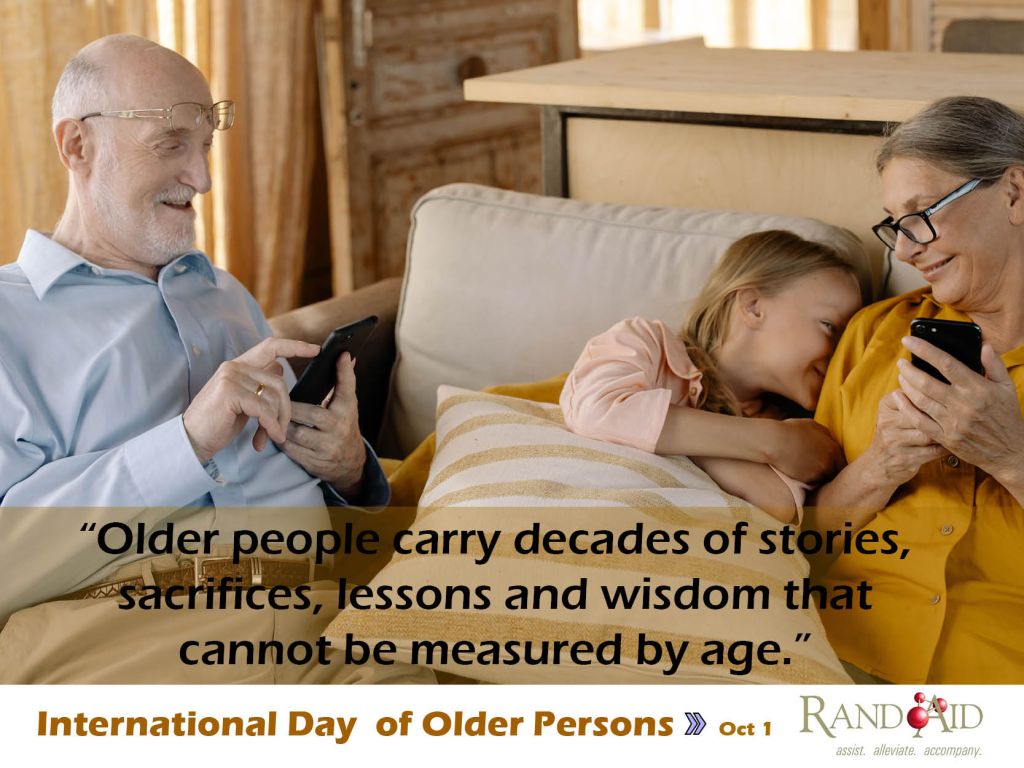
“Older people carry decades of stories, sacrifices, lessons, love, resilience and wisdom that cannot be measured by age,” she says.
“They still have dreams, hopes, passions and a desire to be heard, respected, included and loved.”
Prepare for life’s unexpected changes
Eunice also believes couples should discuss practical matters before one partner dies.
“Discuss financial matters with your spouse and be sufficient so that if your partner passes away, you are not left helpless and clueless.”
She recommends learning basic practical skills, such as changing a tyre or checking a car battery, so that each partner can remain as independent as possible.
“Youngsters must learn to budget,” she adds.
For Violet Ngobeni, Thembalami’s nursing services manager, ageing well is about much more than simply adding years to a person’s life. “It is about adding life, meaning and quality to those years,” she says.
She identifies dignity, purpose, independence, connection, safety and being heard as important aspects of ageing well.
“Being loved and respected, feeling valued, not forgotten or treated as a burden,” is essential, she says, along with having a safe home, appropriate care and the opportunity to remain as active as possible.
Older people should also be included in decisions about their care and their future.
Listen to what older people have learnt
Social worker Lara Swanepoel believes younger generations have much to learn from older people.
She says residents’ experiences demonstrate the value of resilience, patience, perspective and human connection.
“Many residents will tell you that what matters most to them is not what they owned or achieved, but the people they loved and the relationships they built.”
She also says older people can remind younger generations to appreciate simple things – a cup of tea with someone, a visit from family, music, sitting in the garden or simply taking the time to listen.
For Eunice, that willingness to listen and help is important.
And perhaps her advice captures the spirit of International Day of Older Persons: getting older does not mean becoming less of a person. It means adapting to change while still wanting to live, contribute, connect and be valued.
As Esme puts it: “Ageing is not something that happens to ‘other people’ – it is a journey we are all on.”