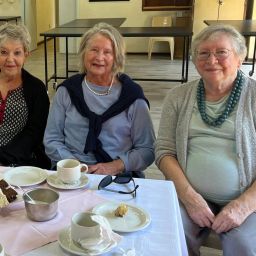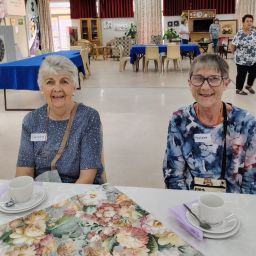

INTERNATIONAL DAY OF OLDER PERSONS
For many, retirement offers the freedom to start an exciting new chapter. For others, daily reality is shaped by whether they have enough money to afford the care and lifestyle they need.
Yet residents and staff at Rand Aid Association say a secure retirement depends on more than having enough money to live on. Preparing for later life also means considering health and housing, maintaining relationships and finding a sense of purpose as circumstances change.
As the World celebrates International Day of Older Persons today (October 1), Rand Aid urges younger people to start planning for their future long before retirement arrives.
Elize Raath, deputy manager of Thembalami Care Centre, says financial preparation should begin as soon as a person is financially stable enough to save.
The key question, she says, is whether a person’s money and resources will reliably support the life they want for the rest of their lives. Her concern comes from seeing people seeking accommodation and care at Thembalami who have little more than a SASSA pension.
Some need care they cannot afford and must rely on their children, who may have families and financial responsibilities of their own or may themselves be pensioners.
Elize admits that, as she approaches retirement herself, she sometimes worries that she has not done enough.
Mike Mortimar and Sandy Greig, residents of Elphin Lodge retirement village, put their advice even more simply: “Save, save, save.”
Getting older is expensive, they say, and people should start saving from their first pay cheque rather than waiting until later in their careers.
Helmut Gschnaidtner, an 88-year-old resident of Ron Smith Care Centre, agrees that saving should start early. He also advises people to be frugal rather than spending money on expensive possessions such as fancy cars.
Avy Hirschowitz, who turns 86 on his next birthday, says people should think about their future beyond their careers from around the age of 40. They should consider how they will generate income after stopping work, whether their pension will be sufficient and whether they have adequate medical aid.
People are living longer, he points out, which means retirement savings may need to last for many years.
Thornhill Manor resident Mike Verburg (89) also advises people to think ahead financially. Looking back, he says he wishes he had prepared more for retirement, including saving more and keeping up with the changing economy.
Prepare for life beyond work
But money is only one part of the equation. Shaun Victor, manager of Thornhill Manor, says people often spend decades preparing financially for retirement while giving too little thought to how they will actually live.
Work provides more than an income. It can provide structure, social contact, identity and a sense of purpose. Losing those things can be a bigger adjustment than expected.
Shaun encourages people to develop interests, relationships and routines that exist independently of their careers.
Retirement, he says, can be an opportunity to travel, develop hobbies, volunteer, study or spend more time with family and friends.
Amanda Diener, Rand Aid’s GM of commercial and compliance, believes people need interests outside their jobs. “There is life outside and beyond work,” she says, encouraging people to work on the balance between earning a living and enjoying life.
Thornhill Manor resident Joan Scott (93) believes preparing for retirement also requires mental and emotional readiness. “Growing older takes patience, strength, and a really good sense of humour,” she says.
Invest in your future health
The same applies to health. Helmut urges younger people to protect their health by exercising, eating well and having regular check-ups to detect and treat chronic conditions before they lead to deterioration.
Thuli Ngoma, a social worker at Elphin Lodge, says working with older people has reinforced the importance of taking care of yourself while you are still young. Exercise, healthy eating, social participation and enjoying life all form part of preparing for the future, she says.
Simoné Botha, manager of occupational therapy and recreation at Ron Smith Care Centre, describes looking after physical, emotional and social health as an investment in the person a younger individual will eventually become.
She also believes people need to learn that accepting help is not a failure. Independence is important, but there may come a time when age, illness or injury means assistance is necessary. “Learning to accept help is just as important as learning to give it,” she says.
Where a person will live is another decision that should not be left until it becomes urgent. Jenny Tonkin, manager of Inyoni Creek retirement village, says people often wait too long before exploring retirement-village options.
She recommends exploring different villages while still healthy and independent and, once a suitable option has been found, joining the waiting list early. Planning means people are more likely to retain a choice about where and how they live later in life.
Tilly Bryant (92), a resident at Ron Smith Care Centre, says people approaching retirement should consider both where they will live and what they will do.
Hlumela Anderson, deputy manager of Elphin Lodge, says planning should also include clearly recording a person’s wishes and preferences about their affairs in case they later become unable to make decisions for themselves.
Lynn Barrow, Tarentaal Village’s deputy manager, recommends having a will and living will in place. Financial planning is particularly important, she says, because residential care can be expensive.
Plan for a life worth looking forward to
But planning for later life should not be seen purely as preparation for decline. Jenny says the expectations of today’s older people have changed. Many are healthier and more independent and want to travel, learn and remain in contact with family and friends, including through technology when loved ones live overseas.
Shaun says improved health and medical advances mean someone reaching retirement age today may have 20 or 30 years ahead of them, with different opportunities from previous generations.
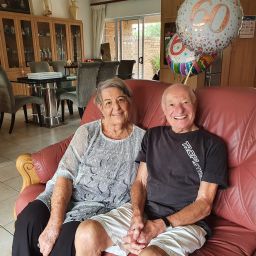
Yvonne and Len Webb say retirement is something to look forward to rather than fear. They encourage people approaching it to try new things and choose a living environment that offers community and friendship.
Michelle Matsolo, a social worker at Inyoni Creek, sees the value of that approach in residents who continue participating in social and physical activities and finding enjoyment in everyday life.
She says Inyoni Creek resident Hilliard Lipworth is a great example of making the most of life despite loss and change. He lost his wife a year ago after being her primary caregiver for many years while she was living with Parkinson’s disease. During that time, travelling was not really possible for him. Recently, she says, he went on holiday to Greece – and his photos show how it is possible to embrace new experiences and enjoy life, even after significant loss and change.
Karen Griessel, a social worker at Thornhill Manor, says the goal should not simply be to ask what can be done for older people, but what can be done to enable them to continue doing things for themselves.
That means preparing for a later life in which people can retain choice, purpose and independence for as long as possible.
Esme van der Walt, manager of Thembalami Care Centre, offers perhaps the broadest reminder: Ageing is not something that happens to other people. “It is a journey we are all on.”