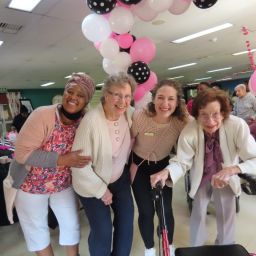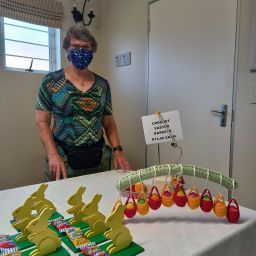

On World Social Work Day (March 17), Rand Aid social workers share the lessons they have learnt from working with older adults in care centres and independent living villages – from finding purpose in later life to the power of simply being present.
Ageing, a time for growth and purpose
Karen Griessel, social worker at Thornhill Manor, emphasises that retirement is not about stopping, but beginning again. “Residents have reshaped my understanding of ageing,” she says. “Purpose does not retire; it transforms.”
Karen notes that life in a thoughtfully designed retirement village supports both physical safety and emotional resilience. “A secure environment combined with social connection reduces risks of falls, cognitive decline and social isolation,” she explains. “Residents show us that resilience is not about avoiding hardship; it’s about adapting and finding meaning in the present moment.”
Listening beyond words
At Ron Smith Care Centre, social worker Nadine Radford describes how caring for frail residents has taught her humility and the value of presence. “Sometimes the most meaningful support is not about fixing a situation, but about standing alongside someone with steadiness and compassion,” she reflects.
Working with residents experiencing cognitive decline has also strengthened her communication skills. “I’ve learnt to listen beyond words and recognise that behaviour often expresses fear, confusion or unmet need.”
Advocacy that respects independence
Michelle Matsolo, social worker at Inyoni Creek, explains her approach to balancing advocacy with respect for residents’ autonomy. “Residents are not looking for someone to step in and ‘save the day’. My role is to walk alongside them, listen carefully, and ensure their voices are heard in decisions that affect their lives. It is a privilege to join them on their journey, but the journey ultimately remains theirs.”
Debbie Beech, manager of Elphin Lodge and a qualified social worker, adds that her work has deepened her appreciation for what matters most to older adults. “Many residents long for time with loved ones, especially those far away. They value being heard and treated as contributing members of society. Each person has rich life experience, and it’s humbling to tap into that wisdom.”
She recalls a meaningful interaction: “When a resident lost her cat, Annie, we held a small memorial with a candle, a framed photo and tea with friends. Seeing her grief acknowledged in this way was profoundly moving – a small act that mattered deeply.”
Managing the emotional weight
Social work can be emotionally demanding, says Thuli Ngoma from Elphin Lodge. “We have to be empathetic at all times, but we tend to forget ourselves. Fatigue and burnout are real. I try to leave work at work, set limits, and disengage where possible, though I do stumble at times.”
Shaun Victor, qualified social worker and manager of Thornhill Manor, echoes this, noting the importance of self-care and peer support. “Later, on the drive home, the emotional weight catches up. I’ve learnt to process what I’ve seen, and two minutes with a colleague who understands can make all the difference.”
The heart of the Rand Aid Way
Lynn Barrow, deputy manager at Tarentaal Village, highlights the influence of the Rand Aid Way campaign: “We are called to have a heart of compassion. Sometimes, simply taking the time to listen can help initiate a healthy process in someone’s life.”
Shaun adds that the Rand Aid Way, the organisation’s broader commitment to safe, dignified relational-centred care, bridges social work principles and managerial responsibilities. “Decisions have to be meaningful for the people living here. A village is more than buildings and services, so the atmosphere we create and the way we treat one another matter as much as infrastructure.”